SE9 house removals checklist for New Eltham residents
Moving home in New Eltham can feel oddly simple at the start and then suddenly chaotic by week two. Boxes appear, sockets get unplugged, the kettle disappears, and someone asks where the gas meter key is. If you are looking for a practical SE9 house removals checklist for New Eltham residents, this guide is built to keep the process calm, organised, and realistic.
Whether you are moving from a Victorian terrace near Eltham town centre, a family house with a narrow hallway, or a flat where the lift is never quite where you need it to be, the same rule applies: the better the preparation, the easier the move. Below you will find a proper step-by-step plan, local considerations, common mistakes, and a checklist you can actually use on moving day.
For readers who want broader support around the move itself, it can also help to look at house removals in Eltham, packing and boxes guidance, and the wider services overview before you get too far along.
Table of Contents
- Why the checklist matters
- How the checklist works
- Key benefits and practical advantages
- Who this is for and when it makes sense
- Step-by-step guidance
- Expert tips for better results
- Common mistakes to avoid
- Tools, resources and recommendations
- Law, compliance, standards and best practice
- Options, methods, or comparison table
- Case study or real-world example
- Practical checklist
- Conclusion
- Frequently asked questions
Why SE9 house removals checklist for New Eltham residents Matters
A house move is not just a transport job. It is a sequence of decisions, timings, keys, permissions, packing choices, and a surprising number of tiny admin tasks that all become urgent at once. A checklist helps you hold the whole move in your head without actually having to hold it all in your head. That sounds simple, but it is a big deal.
For New Eltham residents, the local detail matters too. SE9 homes can vary a lot: some have generous access, others have tight front gardens, awkward on-street parking, or side entrances that are just wide enough if you take your time. In practical terms, a checklist reduces the risk of delays, damaged items, missed utility handovers, and the classic last-minute panic over who has the spare keys.
It also helps you decide what kind of move you really need. A family relocation, a flat move, a student move, and a same-day move all need different levels of planning. If you're unsure which approach suits your property type, pages like flat removals in Eltham, student removals, and same-day removals support can help you think it through.
Practical takeaway: a good moving checklist does more than organise tasks; it protects your time, your furniture, and your nerves. Truth be told, it also protects your Sunday evening after the move, which is no small thing.
How SE9 house removals checklist for New Eltham residents Works
The checklist works best when you treat it as a moving timeline rather than a giant to-do list. Start with the biggest decisions first, then move into packing, booking, and final handover tasks. This prevents that familiar situation where you have labelled twelve boxes but still have not booked the van. It happens more often than people admit.
At a high level, the process usually breaks into four phases:
- Planning phase: confirm dates, measure access, decide what is moving, and book the right removal support.
- Preparation phase: declutter, gather packing materials, and notify utilities, schools, landlords, or agents as needed.
- Packing phase: pack room by room, label clearly, and set aside essential items for the first 24 hours.
- Moving day phase: protect floors and doorways, keep documents handy, manage keys, and check both properties before leaving.
That structure keeps the move from becoming a blur. If you are using professional help, it is worth thinking about whether you need a man with a van in Eltham, a larger removal van, or full removal services. The right choice depends on volume, access, and how much lifting you want to avoid. And honestly, after a long week, a bit of lifting avoidance is reasonable.
Key Benefits and Practical Advantages
A strong moving checklist saves more than time. It helps you make better decisions under pressure, and pressure is where moving mistakes happen. The biggest benefits are not glamorous, but they are very real.
- Less damage: fragile items are packed properly, furniture is protected, and you avoid rushed handling.
- Fewer surprises: access issues, parking concerns, and stair challenges are identified earlier.
- Cleaner handover: you are less likely to leave behind keys, chargers, documents, or meter readings.
- Lower stress: when the day arrives, you are following a plan instead of reacting to everything at once.
- Better cost control: when you know what needs moving, you are less likely to overbook capacity or pay for unnecessary extras.
There is also a subtle benefit that many people miss: confidence. A move feels better when you know what happens next. Even if the day gets messy - and let's be fair, a moving day always has one slightly odd moment - you can recover quickly because you are not improvising from scratch.
If you are comparing services, it can also help to review removal companies in Eltham, man and van options, and the pricing and quotes page to understand what different levels of support usually cover.
Who This Is For and When It Makes Sense
This checklist is for anyone moving home in or around SE9, but it is especially useful if you fall into one of these groups:
- Families moving from one house to another in New Eltham or nearby parts of Eltham
- People moving from a flat where access, parking, or stairs may complicate loading
- First-time movers who have never coordinated utilities, packing, and handover timing before
- Busy professionals who need a clear structure because they are short on time
- Older residents or carers who want the move handled calmly and safely
- Students or sharers moving on a tighter schedule with fewer belongings but more coordination
It makes sense to use a checklist as soon as your move becomes real. Once exchange, notice, or tenancy dates are in sight, the clock starts moving faster than expected. New Eltham residents often have local routines built around school runs, commuting patterns, and familiar shops, so moving disrupts more than just one address. It changes the whole rhythm of the week.
For people with special items - a heavy piano, large wardrobes, or oversized dining furniture - a more tailored plan is wise. Pages like furniture removals and piano removals are relevant when your move needs extra care and equipment.
Step-by-Step Guidance
Below is a practical moving sequence you can follow without having to overthink every item. If you prefer a calm, logical approach, this is the bit to bookmark in your mind.
1. Confirm your moving date and key handover plan
Start with the date. Then ask who is responsible for keys, when the property will be vacated, and whether the new home will be ready at the same time. If there is a gap, storage may be useful. It is better to know this early than to discover you are stuck with a van full of boxes and nowhere to put them.
2. Measure access at both properties
Check hallways, stair widths, front paths, parking proximity, and any awkward turns. In parts of SE9, access can be straightforward one minute and awkward the next. If your road is tight, or you know large vehicles may struggle, review local guidance like these narrow-access moving tips for Well Hall Road. The lessons are useful beyond that one road, to be fair.
3. Declutter before you pack
Do not pack what you no longer want. Moving is the best time to separate items into keep, donate, recycle, and dispose. The less you move, the simpler the day becomes. You will notice how much easier the van loading is when you have not carried six years of "just in case" clutter forward.
4. Book your removal support
Once you know what you are moving, decide on the right level of help. For some households, a basic van service is enough. For others, full packing and moving support is worth every penny because it saves time and reduces risk. If you want to understand service scope in more detail, the removals in Eltham and removal services pages are a sensible starting point.
5. Gather packing materials early
Boxes, tape, labels, stretch wrap, bubble wrap, and marker pens sound basic, but running out of them on packing night is frustrating. The packing phase goes much smoother when materials are ready before you start. For a more focused approach, use packing and boxes support in Eltham rather than improvising with supermarket cartons that are about to collapse at the worst possible moment.
6. Pack room by room
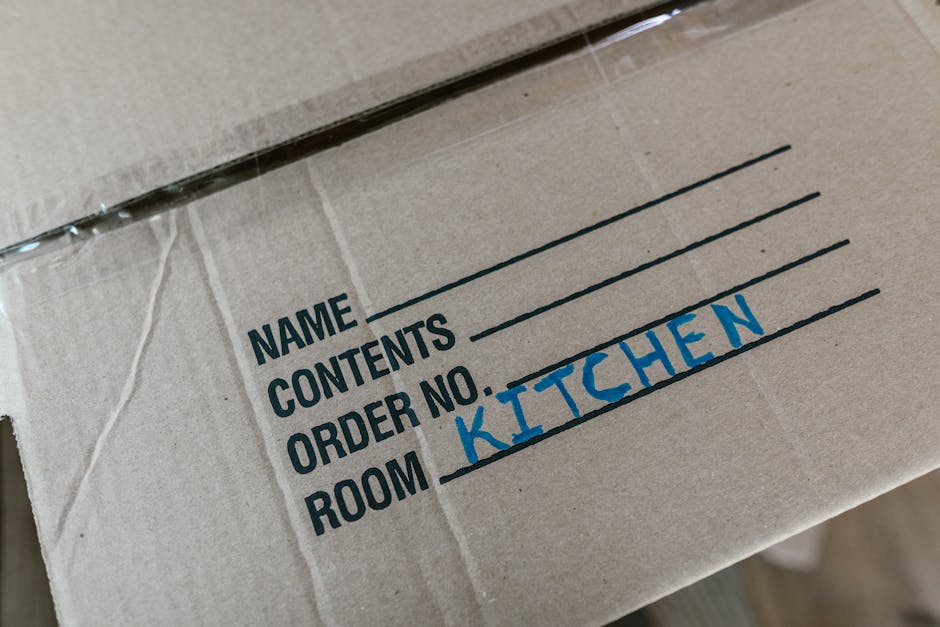
Keep each room together as far as possible. Label boxes clearly with the room name and a short contents note. That one habit saves hours during unpacking. It also helps movers place boxes in the right rooms without you shouting, "Not the kitchen, the other kitchen box!"
7. Prepare an essentials bag
This should hold the things you will need immediately: chargers, medication, toiletries, tea bags, snacks, a change of clothes, toilet paper, important documents, and a kettle if you want to preserve civilisation on day one. It sounds minor. It is not minor.
8. Protect furniture and the property
Use covers where needed, remove loose shelves or mirrors, and protect floors and doorframes. If you are moving bulky items, this step matters more than people think. It is easier to spend ten minutes on protection than hours worrying about scuffs later.
9. Read meters and complete final checks
Before leaving the old property, check meters, windows, taps, loft spaces, cupboards, and behind doors. It is amazing what gets forgotten during the last half hour. Take photos of meter readings if needed and keep notes for your records.
10. Unpack in the right order
When you arrive, start with beds, washing essentials, and the kitchen basics. You do not need to unpack every book or decorative item on day one. Focus on comfort first. The rest can wait until the next morning, when your brain is a little less foggy.
Expert Tips for Better Results
A few practical habits can make a house move far smoother than average. These are the things experienced movers tend to do without making a fuss about them.
- Use colour-coded labels: one colour per room speeds up unloading and reduces confusion.
- Keep screws and fittings together: tape small bags to the furniture they belong to.
- Photograph cable setups: especially TVs, modems, and desk equipment before disconnecting anything.
- Pack heavier items in smaller boxes: a box should be liftable by one person without grimacing too much.
- Leave cushions and linen for last: soft items can fill awkward gaps and protect fragile items.
- Plan around school run or commute timing: New Eltham traffic patterns can make a short move feel longer if you choose the wrong window.
Another good habit: walk through the property the night before. Not a frantic walk. Just a calm, honest look around. You will spot the half-finished shelf, the charger stuck behind the bed, the door stop you forgot about. Small things, yes, but they matter on the day.
If your move involves valuable or sentimental items, check whether additional protection or specialist handling is sensible. The information on insurance and safety can help you think about risk in a practical way.
Common Mistakes to Avoid
Most moving problems are preventable. The trouble is that they look small until they are not.
- Packing too late: last-minute packing leads to broken items and forgotten essentials.
- Underestimating volume: a "few boxes" can quietly become a whole van load.
- Ignoring access issues: narrow roads, parking restrictions, and staircases can slow everything down.
- Not labelling properly: plain boxes become a puzzle when you are tired.
- Forgetting admin tasks: utilities, address updates, and key collection details often get missed.
- Leaving valuables in the wrong place: passports, jewellery, and documents should stay with you.
- Choosing the wrong service level: a van that is too small can cost you more in time and stress.
One mistake that comes up a lot is assuming the move itself is the hard part. In reality, the hard part is the 72 hours around the move. That is when people get tired, distracted, and just a little bit too optimistic. It happens.
If you are comparing providers and want to understand what service level fits your move, the pages on man with a van in Eltham, house removals, and storage in Eltham can be helpful when planning around access, volume, or timing gaps.
Tools, Resources and Recommendations
You do not need a huge toolkit to move well, but a few items make life much easier. Think of this as your moving kit rather than a shopping list.
- Sturdy boxes: a mix of small, medium, and wardrobe-style boxes if required
- Packing tape: more than you think you need, because it always disappears faster than expected
- Permanent marker pens: labels need to be legible at the end of a long day
- Furniture covers or blankets: useful for soft protection during loading
- Zip bags: ideal for screws, brackets, remotes, and loose fixings
- Cleaning supplies: cloths, bin bags, spray, and paper towels for the final tidy-up
- Phone charger and power bank: especially important if you rely on your phone for keys, directions, or family coordination
For more structured help, especially if you are moving furniture, a full property, or an awkward load, it can be worth reviewing furniture removals services and the wider removal companies in Eltham options. If you want to understand the business itself a bit better, there is also useful background on the company's approach and the recycling and sustainability policy.
Law, Compliance, Standards, or Best Practice
House removals are not usually complicated from a legal point of view, but there are still sensible UK best practices to keep in mind. You should always make sure contracts, access arrangements, and service expectations are clear before moving day. If a mover is handling your belongings, clarity around liability, timing, and what is included matters more than flashy promises.
For household moves, best practice usually includes:
- clear written confirmation of dates and service scope
- honest discussion of access, parking, stairs, and fragile items
- safe lifting and loading methods
- respect for property, neighbours, and shared spaces
- careful handling of personal data and household documents
It is also sensible to look at a provider's policies on safety, complaints, privacy, and payment terms if you are comparing options. That may sound dry, but it is one of the easiest ways to judge professionalism. The related pages on health and safety, complaints procedure, privacy policy, payment and security, and terms and conditions are useful markers of that professionalism.
One more practical point: if your move involves time pressure, a landlord deadline, or a same-day change of plan, make sure you understand what can realistically be done safely. Fast is fine. Rushed is another matter entirely.
Options, Methods, or Comparison Table
There is no single correct way to move house in SE9. The best choice depends on how much you own, how much help you want, and how complex the access is. Here is a simple comparison to help you decide.
| Moving option | Best for | Strengths | Watch-outs |
|---|---|---|---|
| Man and van | Smaller moves, quick jobs, light furniture | Flexible, efficient, often ideal for compact loads | May not suit large family houses or bulky furniture |
| Full house removals | Family homes, larger inventories, time-sensitive moves | More support, easier coordination, better for complex loads | Needs more planning and clearer access information |
| Removal van only | People who can manage lifting themselves | Good when you want transport without a full crew | Can be hard work if items are heavy or stairs are involved |
| Storage plus move | Delayed completions, decluttering, or temporary gaps | Useful when dates do not line up neatly | Costs and access need checking in advance |
If you are still deciding, a quick look at removal van options and storage solutions in Eltham is often enough to narrow things down. Simple, but effective.
Case Study or Real-World Example
Here is a realistic example. A couple moving from a two-bedroom home in New Eltham to another property nearby thought the move would be straightforward because the distance was short. It was only a few streets away, after all. Then they measured the access properly and realised one house had a narrow side entrance and the other had awkward parking on a busier road. Not a disaster, just a detail that mattered.
They used a checklist to reset the plan. First, they decluttered the loft and got rid of items they had not touched in years. Then they packed room by room and labelled everything clearly. They set aside kettle items, bedding, and toiletries in one essentials box. The movers were told about the access issue before the day, which meant the vehicle and loading plan were better matched to the property.
The result was not magical. There was still the usual wobble where someone could not find the scissors for ten minutes, and one box of winter coats was in the wrong room for a while. But the move stayed controlled, the key handover happened on time, and they spent the first evening in the new place eating a takeaway on the living room floor rather than hunting for plates. Which, depending on how you view moving day, is a small victory or a very large one.
That is really the point of a good removals checklist. It does not make the day perfect. It makes the day manageable.
Practical Checklist
Use this section as your working checklist. You can print it, copy it into notes, or simply tick it off mentally. Nothing fancy.
- Confirm your moving date and key handover plan
- Check access at both properties
- Measure large furniture and awkward items
- Book the right removals support for your load size
- Order boxes, tape, labels, and protective materials
- Declutter before packing begins
- Pack by room and label clearly
- Separate valuables and important documents
- Create an essentials bag for the first night
- Notify utilities, broadband, and address-related services
- Prepare parking or access instructions if needed
- Protect furniture, floors, and doorways
- Take meter readings before leaving
- Check every room, cupboard, loft, and outdoor space
- Confirm you have keys, mobile phone, chargers, and any paperwork
- Set up beds, kettle items, and basic kitchen essentials first
- Keep a small cleaning kit to hand for final wipe-downs
- Review storage options if your dates do not align
Get a free quote today and see how much you can save.
If you need a sense of who you are dealing with before the move, the about us page is useful, and if you want to talk through your moving plan, the contact page is there when you are ready.
Conclusion
A move in SE9 does not need to feel like a scramble. With a sensible checklist, a realistic timeline, and the right support for your property type, New Eltham residents can handle house removals in a way that feels organised rather than overwhelming. The trick is not doing everything at once. It is doing the right things in the right order.
Measure early, pack steadily, label clearly, and keep your essentials close. If your move is straightforward, great. If it is a bit messy, that is normal too. The goal is not perfection; it is a calm arrival and a first night in your new home that feels settled enough to breathe. And perhaps make a cup of tea without hunting for the mugs.
For extra local context, you may also find it helpful to read about living in Eltham from local residents and local removals around Eltham Palace, especially if your move sits within a busier part of the area.
Frequently Asked Questions
What should be on a house removals checklist for New Eltham?
At minimum, your checklist should cover the moving date, access at both properties, packing materials, decluttering, utility notifications, key handover, meter readings, and an essentials bag for the first night.
How far in advance should I start preparing for a move in SE9?
As soon as your date becomes likely, start planning. For most home moves, a few weeks of lead time is helpful, but even a shorter timeline can work if you stay organised and keep the checklist tight.
Do I need professional removals help for a small house move?
Not always. If you have a light load and straightforward access, a man and van setup may be enough. If you have bulky furniture, stairs, or a tighter schedule, full removals support is often the safer choice.
What are the biggest moving day mistakes people make?
The most common ones are packing too late, underestimating how much stuff they have, not labelling boxes properly, and forgetting access issues like parking or stair width. Those small errors create most of the stress.
How can I make packing easier before a house move?
Pack room by room, keep similar items together, and use clear labels. Start with the things you use least, and keep a separate bag for essentials so you are not digging through boxes on the first night.
Is storage worth considering during a house move?
Yes, if your dates do not line up or you need to reduce clutter before moving day. Storage can make a complicated move feel much more manageable, especially when completion dates shift.
What kind of moving service is best for family homes in New Eltham?
Family homes often benefit from fuller house removals support because there is usually more furniture, more boxes, and more coordination. That said, the best service depends on volume, access, and how much help you want.
How do I know if my property access will be a problem?
Measure doorways, hallways, staircases, and any outdoor access route. Also think about parking distance and whether a larger vehicle can stop safely nearby. If it feels tight to you, it is worth treating it as a real constraint.
What should I keep with me instead of sending it on the van?
Keep valuables, medication, passports, keys, chargers, important documents, and your essentials bag with you. If you would be annoyed to lose it, keep it close. That is the simplest rule.
Are there special considerations for flat moves in SE9?
Yes. Flats often bring lift access, shared corridors, parking limits, and tighter stair turns into the picture. That is why flat removals need careful planning, even when the move itself is not very large.
How can I keep moving costs under control?
Declutter before packing, choose the right service level, and provide accurate information about volume and access. A clear plan usually prevents costly overestimation or unnecessary extra time on the day.
What if I need to move quickly at short notice?
If the timeline is tight, prioritise essentials, reduce what you are moving, and look for a service that can handle a quicker turnaround. Short-notice moves can work well when the scope is realistic and the paperwork is in order.
Should I read policies before booking removals?
Yes. It is sensible to understand terms, safety practices, payment security, and complaint handling before confirming anything. A good provider should be clear, calm, and easy to deal with. That part matters more than a glossy promise.