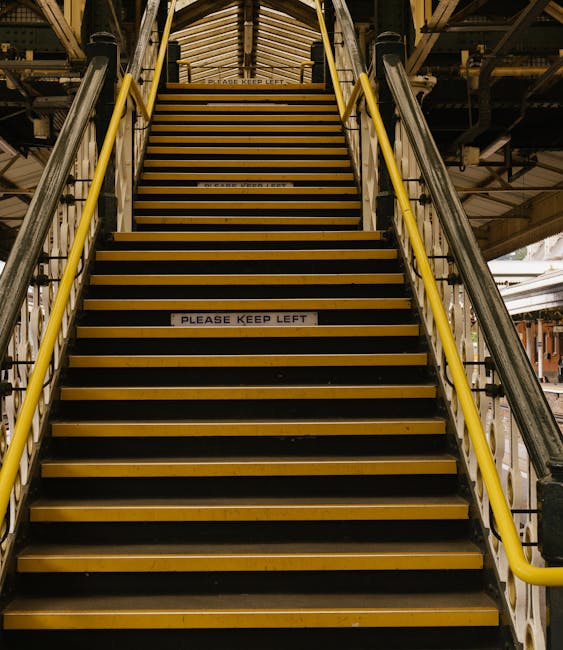
Staircase and Access Challenges for Eltham Man with a Van
If you are planning a move in Eltham, the stairs may be the part that catches you out. Not the packing, not the boxes, not even the parking permits. It is the staircase and access challenges for Eltham man with a van that often decide whether a move feels smooth or slightly chaotic. Narrow halls, basement steps, awkward turns, top-floor flats, tight parking, no lift, heavy furniture. It all adds up. And truth be told, a good plan here saves more time and stress than most people expect.
This guide explains how access issues affect a man with a van move in Eltham, what to check before moving day, and how to avoid the classic mistakes that lead to delays, damage, or backache. You will also find a practical checklist, a comparison table, and a realistic example based on the kinds of properties people actually deal with around Eltham, Mottingham, and nearby south-east London streets.
Why Staircase and access challenges for Eltham man with a van Matters
Access issues matter because they change almost everything about a removal. A straightforward ground-floor move can be handled quickly, while a third-floor flat with a narrow stairwell may need more time, more care, and more people. That is not drama; it is just logistics. If the route from van to front door is awkward, the job becomes slower and riskier.
In Eltham, you often get a mix of housing styles. Some homes have decent driveway space and wide entrances, while others have tight Victorian staircases, shared entrances, basement steps, or on-street parking that puts the van a long way from the front door. Add a rainy day and a sofa with no decent grip points, and things can get messy fast.
This is why planning access is not a small detail. It helps with:
- protecting furniture and walls from scrapes
- reducing the chance of personal injury
- keeping the move on schedule
- avoiding surprise costs from extra labour or longer loading times
- making sure the right vehicle and equipment are used
To be fair, most moving problems are not caused by the van itself. They happen at the threshold, the stairs, or the corner where the wardrobe simply refuses to turn. That is the bit people forget to measure.
How Staircase and access challenges for Eltham man with a van Works
The practical side is fairly simple. Before moving day, the mover needs to understand the access at both addresses. That includes the staircase, the distance from the van to the door, whether there is a lift, how wide the hallway is, and whether any items need dismantling. The more accurately this is described, the easier it is to plan the move properly.
For an Eltham man with a van service, access planning normally affects five things:
- Vehicle positioning - where the van can safely stop without blocking traffic or causing issues.
- Carrying distance - how far items must be lifted from the property to the vehicle.
- Staffing - whether one person is enough or whether a second pair of hands will make the job safer.
- Protection measures - blankets, straps, trolleys, gloves, door protectors, and floor coverings.
- Time estimates - a realistic allowance for stairs, tight turns, and careful handling.
It is also worth separating easy access from easy loading. A place might have a short path to the van but a steep staircase inside. Or the stairs may be fine, but the parking is awkward and the lift is out of order. Different problem, same headache.
One thing that catches people out: stairs are not just a fitness issue. They are a handling and planning issue. A heavy item needs a safe grip, enough clearance, and the right angle through the building. If any of those are off, the risk climbs quickly.
Key Benefits and Practical Advantages
When access challenges are planned well, the benefits are immediate and very noticeable. You can feel the difference almost from the first box. Less stopping and starting. Less stress. Fewer "we might need to take that apart" moments. The move just flows better.
- Better safety: fewer slips, trips, strained backs, and pinched fingers on stairs.
- Less damage: careful handling helps protect stair rails, walls, banisters, and furniture edges.
- More accurate timing: realistic access planning keeps the schedule honest.
- Lower frustration: nobody enjoys discovering a sofa will not make the landing turn after loading half the van.
- Smoother communication: everyone knows what to expect before arrival.
There is also a commercial advantage for anyone comparing quotes. If you provide accurate access details, you are more likely to get a useful price rather than a vague one. That matters. A cheap estimate based on guesswork can become expensive once the stairs show up in real life.
Expert summary: In most local moves, access planning is less about "can it be done?" and more about "how do we do it cleanly, safely, and without wasting everyone's afternoon?" That is the real question.
Who This Is For and When It Makes Sense
This kind of planning makes sense for anyone moving into or out of a property with limited access, but it is especially useful for:
- people living in flats with stair-only access
- tenants in converted houses with narrow internal staircases
- homeowners with awkward front steps, side access, or tight hallways
- small business owners moving stock, desks, or equipment in and out of upper floors
- anyone with bulky furniture, heavy appliances, or fragile items
It also makes sense if you are dealing with a time-limited move. Maybe the lift in the block is out of service. Maybe parking is tight and you only have a short unloading window. Maybe your move is happening after work, in winter, when the light starts fading at around 4 pm and everything feels slightly more difficult. In those cases, good access planning is not optional, it is what keeps the day bearable.
If your move is very small, you may still be fine with a simple man and van arrangement. But if the stairs are steep or the route is long, you should think in practical terms rather than assuming "it's only a few items." A few items can still be awkward items.
Step-by-Step Guidance
Here is the cleanest way to approach staircase and access planning without overcomplicating it.
- Walk the route at both properties. Start from the van parking spot and walk to the room where each item is stored. Look for tight corners, low ceilings, steps, and door handles that might snag.
- Measure the awkward parts. Width of staircases, landing depth, height of banisters, and the size of larger furniture all matter. You do not need an architect's notebook; just enough detail to know what might catch.
- Identify the heaviest and most awkward items. Sofas, wardrobes, bed frames, washing machines, and tall bookcases usually need the most attention.
- Check parking and stopping options. If the van cannot get close, expect a longer carry. That changes timing and manpower.
- Decide whether items need dismantling. Sometimes removing a bed frame or table legs saves far more time than trying to wrestle it through a staircase. Simple, really.
- Share the access details early. Do not wait until the van has arrived. Tell the mover about stairs, lifts, narrow lanes, and anything unusual before the booking is finalised.
- Prepare the property. Clear hallways, move shoes and mats, and make sure doors can open fully. Small things, big difference.
- Protect surfaces. Blankets, wraps, and floor protection reduce the chance of scuffs, especially on painted walls and polished floors.
- Allow a sensible time buffer. A staircase move is rarely the job that finishes exactly to the minute. Build in breathing room.
A good rule of thumb: if you think a piece of furniture is "probably fine," test the route first. That five-minute check can save thirty minutes of awkward manoeuvring later. Or a damaged wall. Or worse, a muttered apology nobody really wanted to make.
Expert Tips for Better Results
In our experience, the best moves are the ones where the awkwardness has already been named. Once you say, "the stairs are narrow and the sofa has a fixed arm," everyone can start solving the problem properly.
Here are the tips that make the biggest difference:
- Take photos of the staircase and landings. A quick phone picture often explains the situation better than a long message.
- Use a tape measure on the widest furniture first. If the biggest item fits, the rest usually becomes much easier.
- Keep boxes small for upper-floor moves. A box that is too heavy on the stairs becomes awkward very quickly.
- Remove obstacles before the van arrives. Bikes, bins, plant pots, and hallway clutter all slow things down.
- Book earlier in the day where possible. You get more daylight, more flexibility, and less pressure if something unexpected happens.
- Use the right lifting technique. Careful lifting beats rushing every time. No prize for heroics.
- Be honest about access. If the building has a tight bend or the parking is a bit of a nuisance, say so.
A small but important point: if a job involves stairs, protect the route first and the item second. People often wrap the furniture beautifully and then drag it past a scuffed wall because the route was never cleared. That is backwards.
Also, don't assume a lift solves everything. Some lifts are too small for large items, some are shared and busy, and some do not go all the way to the exact floor you need. A lift is helpful, yes. Magical? Not always.
Common Mistakes to Avoid
Most access problems come from a handful of predictable mistakes. None of them are unusual. That is the annoying part. They are very normal, very avoidable, and still they happen all the time.
- Underestimating stair width and landing turns. The sofa that looks fine in the lounge can become a real problem on the second landing.
- Forgetting about parking distance. Ten extra metres to carry each item can add up fast.
- Not mentioning upper floors. "It's just a flat" is not enough detail. Which floor? Is there a lift? Is it working?
- Leaving dismantling until moving day. That is how delays happen.
- Packing boxes too full. Heavy boxes and stairs are not friends.
- Ignoring wet weather. Wet steps, damp boxes, and poor grip make the job slower and riskier.
- Assuming one person can manage every item. Sometimes yes, sometimes not. It depends on the item and the route.
Another one, and this is a classic: people only describe the front of the property. "It's a small terrace." Fine. But what about the rear access? What about the staircase inside? What about the 180-degree turn on the first floor? Those details matter more than the house type itself.
Tools, Resources and Recommendations
You do not need a warehouse full of gear to handle access issues well, but a few practical tools help a lot. The right kit is often the difference between a smooth carry and a clumsy shuffle.
- Measuring tape: for stair widths, doorways, and furniture dimensions.
- Phone camera: to capture awkward angles, landings, and parking spots.
- Furniture blankets and wraps: useful for protecting items and tight stair corners.
- Stretch wrap and straps: helps keep doors shut and parts secure during movement.
- Trolley or sack truck: useful for suitable items on level ground, though not always ideal on steep stairs.
- Gloves with grip: simple, practical, and often overlooked.
- Door stops: small but helpful when you need hands free for lifting.
If you are looking for a broader move service, it can also help to understand the wider support available. For example, a full removal services package may suit larger or more complicated moves, while a flexible man and van arrangement can work better for smaller local jobs with tricky access.
For people planning a home move, useful background reading can also make the process calmer. A page like home moves is often a good starting point if you want to think through the whole day rather than only the staircase.
And if your move involves bulky furniture only, a focused option such as furniture pick up may be the more sensible route. Sometimes the most efficient plan is the simplest one.
Law, Compliance, Standards, or Best Practice
For staircase and access work, the most important thing is safe handling and sensible risk management. In the UK, movers are expected to work carefully, avoid foreseeable harm, and handle items in a way that does not put people or property at unnecessary risk. You do not need a legal lecture for that; just a careful, common-sense approach.
Best practice usually includes:
- checking the route before lifting heavy items
- using adequate manpower for heavy or awkward furniture
- keeping stairways clear of loose items and trip hazards
- wearing suitable footwear with good grip
- protecting surfaces where practical
- being transparent about limitations and access constraints
If a building has shared access, it is also sensible to be considerate about noise, block entrances, and parking. That is not just polite; it helps avoid complaints from neighbours or building management. Nobody wants a move to become a small neighbourhood event.
Insurance and safety matter too. Before booking any move with difficult stairs, it is wise to ask how items are protected during loading and carrying. A provider should be able to explain their approach in plain English, not just wave vaguely and say "we do this all the time." Helpful as that may sound, it is not a plan.
If you want to learn more about how a provider approaches safety and handling, the insurance and safety page is a sensible place to look. For broader operational standards, a company's health and safety policy can also give useful reassurance.
Options, Methods, or Comparison Table
There is no single right way to deal with stairs and access problems. The best method depends on the property, the furniture, and how much help you need. Here is a simple comparison that may help.
| Approach | Best For | Pros | Limitations |
|---|---|---|---|
| Single-person man and van | Small loads, short carries, straightforward stairs | Flexible, often cost-effective, good for lighter jobs | Less suitable for heavy furniture or long stair carries |
| Two-person lift support | Bulky, awkward, or fragile items | Safer handling, easier turns, less strain | Usually takes longer to organise and costs more |
| Dismantle and reassemble | Large furniture, narrow landings, tight turns | Often makes impossible moves possible | Needs time, tools, and careful reassembly |
| Full removal service | Whole-house moves, heavy inventories, complex access | More support, less stress, better for larger relocations | Usually the highest-cost option |
If you are unsure, think about the hardest item, not the easiest one. A hallway full of boxes is one thing. A double wardrobe on a curved staircase is another. That one item often decides the whole approach.
For larger projects or business moves, you may prefer a broader service like commercial moves or office removals, especially where access, timing, and equipment matter at the same time.
Case Study or Real-World Example
Here is a realistic example. A couple in Eltham were moving out of a first-floor flat with a tight internal staircase and a large corner sofa that had been bought years earlier and, like many things, felt much smaller in the showroom. The front entrance was fine, but the landing turn was the real issue. The sofa simply would not make the bend in one piece.
Instead of forcing the move and hoping for the best, they measured the sofa, checked the staircase width, and shared photos in advance. The plan changed slightly. The sofa legs came off, the route was cleared, and the heaviest lift was done with two people instead of one. The move took longer than a simple ground-floor job, sure, but it stayed controlled. No damage, no panic, no gouged wall plaster. A decent outcome, all told.
What made the difference? Not luck. Preparation.
This kind of example shows why access planning is so useful. The issue was not that the move was impossible. It was that the wrong approach would have made it needlessly difficult. And once you see that pattern, you start noticing it everywhere.
Practical Checklist
Use this checklist before moving day. It is simple, but it covers the bits that usually matter most.
- Measure the widest piece of furniture
- Check stair width, landings, and turns
- Confirm whether a lift is available and working
- Check how far the van will be from the entrance
- Clear hallways, stairs, and doorways
- Decide which items may need dismantling
- Use small boxes for heavy contents
- Take photos of any awkward access points
- Tell the mover about any parking or access restrictions
- Protect floors, banisters, and wall corners where needed
- Prepare keys, entry codes, and building access details
- Allow extra time for stairs, weather, or delays
Quick takeaway: if you only do one thing, measure the awkward bits early. That one habit prevents a surprising number of moving-day problems.
Get a free quote today and see how much you can save.
Conclusion
Staircase and access challenges for Eltham man with a van are not just a minor detail. They shape the whole move. Once you understand the route, the stairs, the parking, and the size of the items, you can make better decisions and avoid the usual headaches.
The good news is that most access problems are manageable with a bit of planning. Measure early. Share details honestly. Keep the route clear. Choose the right level of help. Simple advice, yes, but it works. And on moving day, simple is usually what you want.
If you are planning a move in or around Eltham, a careful approach now can save you a very long afternoon later. That is the honest version. The helpful version is this: with the right preparation, even awkward stairs become just another part of the job.
When the boxes are stacked and the last item is through the door, you will be glad you took the access side seriously. Small steps, properly handled, make a big difference.
Frequently Asked Questions
What are the main staircase and access challenges for a man with a van move?
The main issues are narrow staircases, tight landings, long carrying distances, poor parking, low ceilings, and furniture that is too large to turn safely. Even one awkward feature can slow the whole move.
How do I know if my furniture will fit down the stairs?
Measure the widest point of the furniture and compare it with the narrowest point of the staircase, landing, or doorway. If there is a curved turn or bannister, photos help as much as measurements.
Should I tell the mover about stairs before booking?
Yes, absolutely. Access details should be shared before the booking is confirmed if possible. It helps with timing, vehicle choice, staffing, and whether any items need dismantling.
Does a lift make access problems go away?
Not always. Lifts can help, but they may be too small, shared, slow, or out of service. It is still worth checking the route from the lift to the property and from the property to the van.
Can a man with a van handle a top-floor flat in Eltham?
Often yes, but it depends on the items, the staircase, the parking, and how much help is needed. A top-floor flat is usually manageable with good planning, but heavy furniture may need extra support.
What items cause the biggest staircase problems?
Wardrobes, sofas, mattresses, washing machines, bed frames, large mirrors, and tall bookcases tend to cause the most trouble. They are awkward to turn and easy to damage if rushed.
How can I make moving day faster when access is tight?
Clear the route, dismantle furniture in advance, keep boxes light, and park the van as close as safely possible. Also, have keys and access codes ready so nobody is standing around waiting.
Is it better to dismantle furniture before moving?
If the staircase is narrow or the furniture is bulky, yes, often it is. Dismantling can save time and reduce the risk of damage, especially with beds, tables, and some wardrobes.
Will difficult access increase the cost?
It can, because more time, labour, and care may be needed. The exact effect depends on the property and the items involved. Clear access information usually leads to a more accurate quote.
What should I do if parking is far from the entrance?
Tell the mover in advance, check whether there are loading restrictions, and allow more time for carrying items. Long carrying distances are not a deal-breaker, but they do change the job.
How do I protect stairs and walls during a move?
Use blankets, wraps, and floor protection where needed, and keep the route clear. Careful lifting and good communication help just as much as any equipment.
What is the best first step if I'm worried about access?
Walk the route with a tape measure and take a few photos. That simple step usually reveals whether the move is straightforward, needs extra help, or should be planned in a different way.